Buying Guide
Lens Mount Adapters: How to Use Lenses Across Systems
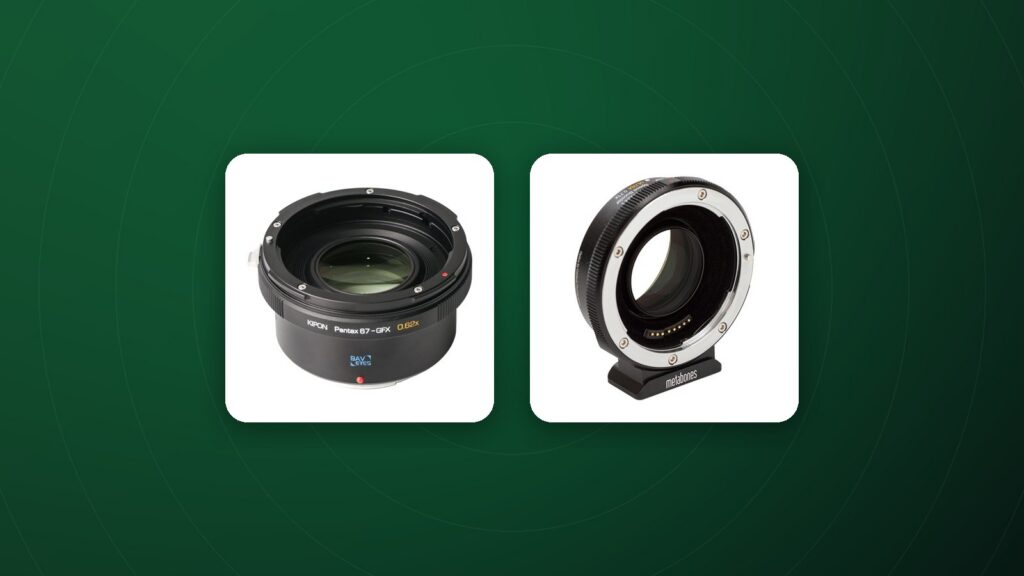
A lens mount adapter connects a lens designed for one camera system to a body from another. Thanks to the short flange distance of mirrorless cameras, adapters can open up an enormous range of modern, vintage and cinema lenses.
Why adapters work best on mirrorless cameras
Flange distance is the gap between the lens mount and the sensor. Mirrorless cameras have a short flange distance, so there is room to insert an adapter of the right thickness for a lens designed for a longer flange, such as a DSLR or cinema lens. Adapting in the other direction is usually not possible without extra optics.
Types of adapters
- Manual (dumb) adapters: simple metal rings with no electronics. Ideal for manual-focus vintage and cinema lenses.
- Smart adapters: pass electronic signals for autofocus, aperture control, stabilisation and lens data. Compatibility varies by lens and body.
- Focal reducers (speed boosters): contain optics that make a full-frame lens behave like a wider, brighter lens on a smaller sensor.
- Cine mount adapters: robust adapters, often with lens support, for PL or other cinema lenses on mirrorless bodies.
Autofocus and compatibility
Smart adapters can deliver good autofocus, but performance depends on the specific lens, adapter and camera. Some features, such as continuous autofocus during video, may be slower than with native lenses. Check compatibility lists and firmware updates before buying.
Build quality and lens support
A well-made adapter should fit snugly without play, which can affect focus accuracy and sharpness. For heavy lenses, use lens support or mount the lens’s tripod foot instead of the camera, to avoid stress on the mount.
When to choose a native lens instead
If you rely on fast continuous autofocus for sports, events or wildlife, a native lens is usually the more reliable choice. Adapters are ideal for manual focus, specific looks, cinema lenses and using existing lenses during a system change.
Vintage lenses on modern cameras
Adapters make it easy to use vintage manual-focus lenses, which can add character such as softer contrast and unique flares. Focus peaking and magnification on mirrorless cameras make manual focusing much easier than on older bodies.
Cinema lenses on mirrorless bodies
PL to mirrorless adapters allow filmmakers to use cinema lenses with compact cameras. Choose robust adapters with locking mounts and lens support to keep heavy lenses secure and aligned.
Frequently Asked Questions
Do adapters reduce image quality?
A simple adapter without glass does not affect optical quality if it is well made. Focal reducers contain optics, so quality depends on their design.
Will image stabilisation work?
In-body stabilisation usually works if you set the focal length; lens stabilisation depends on adapter support.
Can I adapt DSLR lenses to mirrorless?
Yes. This is one of the most common uses for adapters.
Are cheap adapters safe?
Poorly made adapters can have play or inaccurate thickness, affecting focus. Choose a well-made adapter that fits snugly.
Do focal reducers change the aperture?
Yes. A focal reducer makes the lens wider and brighter, typically by around one stop.
Shop adapters
Find the right fit in our lens mount adapters collection, with full specs and 60-day returns on eligible items.