Buying Guide
How to Choose a Wildlife Photography Lens
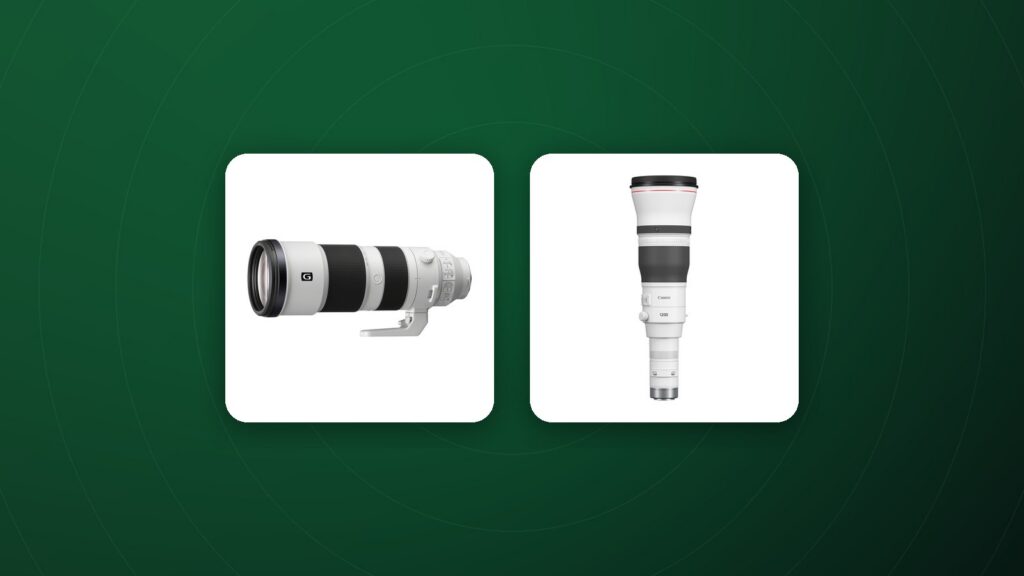
The right wildlife photography lens lets you fill the frame with animals and birds without disturbing them. Reach is important, but so are autofocus speed, stabilisation, aperture and how much weight you can carry for a day in the field.
How much focal length do you need?
- 100 to 300 mm: larger animals, safaris from vehicles and zoos.
- 400 to 600 mm: the sweet spot for most wildlife and many birds.
- 600 mm and beyond: small birds and shy subjects at a distance.
An APS-C camera multiplies the effective reach by about 1.5x, which is why many wildlife photographers use crop-sensor bodies.
Telephoto zooms vs primes
Super-telephoto zooms such as 100 to 500 mm or 200 to 600 mm are versatile and comparatively affordable, letting you reframe as animals move closer or further away. Telephoto primes such as 400 mm or 600 mm with wide apertures gather more light and focus faster, but they are larger and more expensive.
Aperture and early-morning light
Animals are often most active at dawn and dusk. A wider aperture lets you keep shutter speeds high without pushing ISO too far. Modern cameras handle high ISO well, so f/5.6 to f/6.3 zooms are very usable, but f/2.8 and f/4 primes give a real advantage in low light.
Image stabilisation
Lens stabilisation, often combined with in-body stabilisation, makes handheld shooting at long focal lengths much easier, especially for slower subjects.
Teleconverters
A 1.4x or 2x teleconverter increases focal length but reduces the maximum aperture by one or two stops. They work best with fast telephoto primes and compatible zooms; check compatibility before buying.
Support and carrying
A monopod or a tripod system with a gimbal-style head supports heavy lenses during long waits. For hides and vehicles, bean bags are also popular. Consider weight carefully if you hike to your locations.
Fieldcraft matters
Patience, knowledge of animal behaviour and respect for wildlife produce better images than any lens. Keep a respectful distance and follow local rules in parks and reserves.
Camera settings for wildlife
Use continuous autofocus with animal or bird detection, a fast shutter speed such as 1/1000 s or faster for birds in flight, and auto ISO to keep exposure consistent. For perched subjects, slower shutter speeds work well with stabilisation.
Choosing between reach and weight
A longer lens is not always better if it is too heavy to carry or hold steady. Many wildlife photographers choose a lighter zoom for hiking and travel, and a large telephoto prime for hides and vehicle-based shooting.
Protecting your lens outdoors
Use lens covers, rain sleeves and a lens hood to protect against weather and impacts. A padded backpack or hard case keeps expensive telephotos safe during travel.
Frequently Asked Questions
Is 300 mm enough for wildlife?
For larger animals and safaris, often yes. For birds, 400 to 600 mm is usually preferred.
Zoom or prime for birds?
Zooms are more flexible and affordable; primes are brighter and faster but heavier and more expensive.
Do I need a tripod for wildlife photography?
Not always, thanks to stabilisation, but a monopod or tripod helps during long waits and with heavy lenses.
What shutter speed is best for birds in flight?
Many photographers start at 1/2000 s for small birds and adjust depending on light and subject speed.
Is APS-C better for wildlife?
The crop factor gives extra reach, which many wildlife photographers find useful, especially on a budget.
Shop telephoto lenses
Explore telephoto zooms and primes in our mirrorless camera lenses range, with full specs and 60-day returns on eligible items.