Buying Guide
How to Choose a Landscape Photography Lens
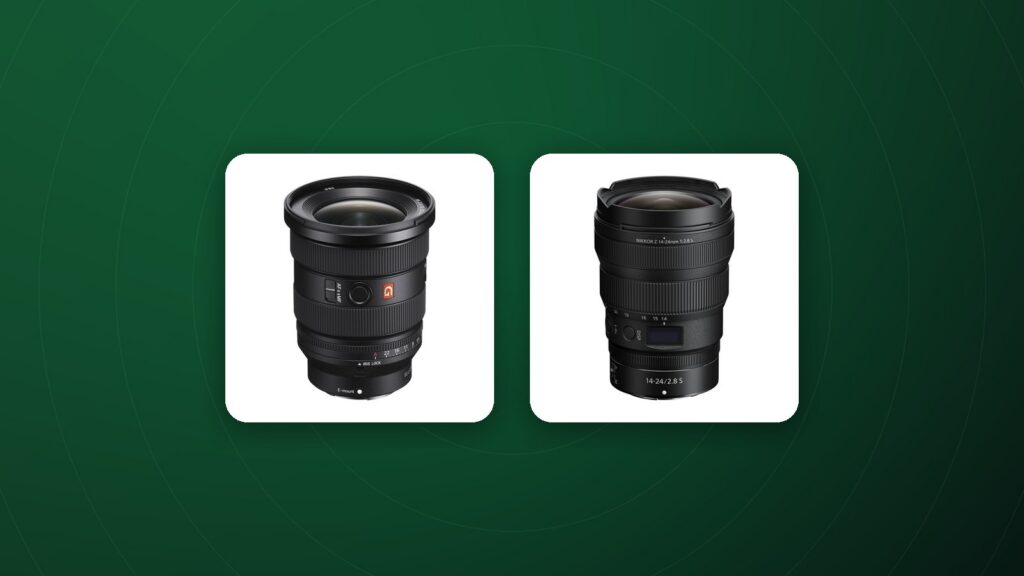
A good landscape photography lens helps you capture big skies, sweeping foregrounds and fine detail from corner to corner. Wide angles are the usual starting point, but standard and telephoto lenses also play an important role in landscape work.
Wide-angle zooms: the landscape staple
Zooms around 14 to 24 mm or 16 to 35 mm on full frame let you include dramatic foregrounds such as rocks, flowers or water while still showing the sky. Very wide focal lengths exaggerate depth, making near objects look larger and distant mountains smaller, which adds a strong sense of scale.
Standard zooms for natural perspective
A 24 to 70 mm zoom gives a more natural view and is excellent for compositions where the background is the hero, such as a mountain range or a coastline at sunset.
Telephoto lenses for landscapes
A 70 to 200 mm or longer lens compresses distance, stacking layers of hills, isolating a single tree or highlighting light falling on a distant peak. Many landscape photographers find some of their favourite images come from a telephoto.
Sharpness and aperture
Landscapes are often shot at f/8 to f/11 for front-to-back sharpness, so a very wide maximum aperture is not essential for daytime work. Corner-to-corner sharpness and low distortion matter more. For night skies and the Milky Way, a fast wide lens such as f/1.8 or f/2.8 is very valuable.
Filters and lens design
Polarising, neutral density and graduated filters are key landscape tools. Check whether a lens has a front filter thread; some ultra-wide lenses have a bulbous front element and need a dedicated filter holder.
Weather sealing and weight
Landscape photography often means rain, spray, dust and long hikes. Weather-sealed lenses and a lighter overall kit make a real difference in the field.
Don’t forget support
A stable tripod lets you use low ISO, long exposures for silky water and precise compositions. Carbon fibre legs reduce weight on long hikes.
Composition tips for wide lenses
Wide lenses reward strong foregrounds. Get low and close to an interesting rock, plant or line in the land, and use it to lead the eye into the scene. Keep the horizon level and watch the edges of the frame for distracting elements.
Focus for front-to-back sharpness
Focus about one-third into the scene, or use focus stacking by taking several images focused at different distances and blending them in editing. Very small apertures such as f/22 can soften images because of diffraction, so f/8 to f/11 is often the sharpest choice.
Night and astrophotography lenses
For the Milky Way, look for a wide lens with a fast aperture and good control of coma, which keeps stars in the corners round rather than smeared. A sturdy tripod and a remote release are essential.
Frequently Asked Questions
What focal length is best for landscapes?
There is no single answer. Many photographers carry a wide zoom, a standard zoom and a telephoto to cover different compositions.
Do I need a fast lens for landscapes?
For daytime, no. For astrophotography and night scenes, a fast wide lens is very helpful.
Is a prime or zoom better for landscapes?
Zooms are more practical in the field; primes can be lighter and sharper, especially for night-sky photography.
Do I need ND filters for landscapes?
ND filters let you use long exposures in daylight for silky water and moving clouds.
Is a 16-35 mm or 14-24 mm better?
14-24 mm lenses go wider; 16-35 mm lenses often accept standard screw-on filters and are more versatile for everyday use.
Shop landscape lenses
Compare wide-angle and telephoto options in our camera lenses collection, with full specs and 60-day returns on eligible items.