Buying Guide
Prime vs Zoom Lens: Which Should You Buy?
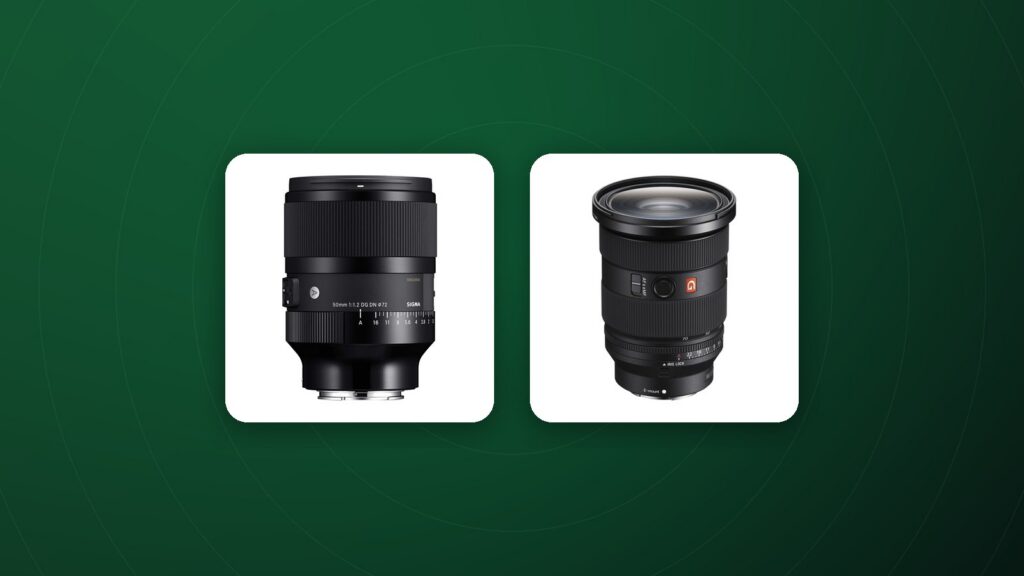
The prime vs zoom lens debate is really about trade-offs. A prime lens has one fixed focal length; a zoom covers a range. Neither is better in every situation, and most experienced photographers end up owning both.
What is a prime lens?
A prime lens has a single focal length, such as 35 mm, 50 mm or 85 mm. Because the optical design only has to work at one focal length, primes are often smaller, lighter and brighter than zooms covering the same view.
What is a zoom lens?
A zoom lens covers a range of focal lengths, for example 24 to 70 mm or 70 to 200 mm. You change framing by turning the zoom ring instead of moving your feet or swapping lenses.
Aperture and low light
Primes commonly offer wide maximum apertures such as f/1.8, f/1.4 or even f/1.2. That lets in much more light than a typical zoom, which is ideal for indoor events, night scenes and creating soft, blurred backgrounds. Professional zooms often have a constant f/2.8 aperture; kit zooms usually have variable apertures such as f/3.5 to f/5.6.
Image quality
Modern zooms are very sharp, but primes still tend to have an edge in sharpness at wide apertures, lower distortion and fewer compromises. For critical portrait, product and astrophotography work, many photographers prefer primes.
Flexibility and speed of working
Zooms shine when you cannot move freely or need to react quickly: weddings, events, travel, sports and wildlife. With one zoom you can switch from a wide establishing shot to a tight detail without changing lenses or missing the moment.
Prime lens
- Wider apertures for low light
- Stronger background blur
- Often smaller and lighter
- Encourages deliberate composition
Zoom lens
- Many focal lengths in one lens
- Fewer lens changes
- Fast reaction at events
- Ideal for travel kits
Building a balanced kit
- Starter kit: a standard zoom plus one fast prime (35 mm or 50 mm).
- Portraits: an 85 mm prime alongside a 24 to 70 mm zoom.
- Travel: one versatile zoom and a small, bright prime for evenings.
- Video: primes for controlled scenes, zooms for run-and-gun shooting.
Prime lenses for video
For video, primes offer bright apertures that help in low light and create a cinematic shallow depth of field. Their consistent size and weight also make them easier to balance on gimbals. On the other hand, a zoom saves time on documentary and event shoots where you cannot stop to change lenses.
Weight and travel
A single zoom lens is often lighter than carrying three primes covering the same range. However, a small prime can be lighter than any zoom, which makes it ideal for street photography and everyday carry.
Cost considerations
Budget primes, such as 50 mm f/1.8 lenses, are among the most affordable ways to improve image quality. High-end constant-aperture zooms cost more but replace several lenses at once, so they can be good value for professionals.
Frequently Asked Questions
Are prime lenses sharper than zoom lenses?
Often, especially at wide apertures, but high-end zooms are extremely sharp. The difference is small for most everyday photography.
Which is better for beginners?
A standard zoom is the easiest starting point. Adding an affordable 50 mm prime is a great way to learn about aperture and depth of field.
Is a 50 mm lens a good first prime?
Yes. It is versatile, usually affordable and works well for portraits, street and everyday photography.
Is a 24-70 mm zoom enough for most photography?
For many photographers, yes. It covers wide scenes, street, travel and portraits in one lens.
Do prime lenses make you a better photographer?
They encourage you to move and think about composition, which many photographers find helpful when learning.
Shop lenses
Compare primes and zooms in our mirrorless camera lenses and SLR camera lenses, with full specifications and 60-day returns on eligible items.