Buying Guide
How to Choose a Fluid Head Tripod for Video
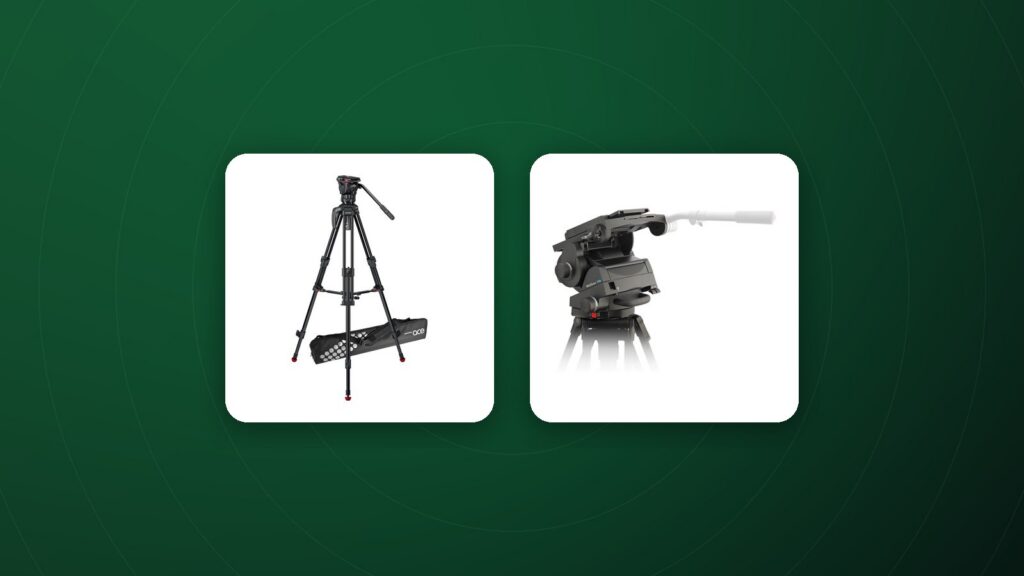
A fluid head tripod is the foundation of smooth, professional camera movement. Unlike photo ball heads, a fluid head uses damped mechanisms so pans and tilts start, move and stop smoothly.
Start with payload
Add up the weight of everything on the head: camera, lens, monitor, battery, matte box and accessories. Choose a head whose payload range comfortably includes that total. A head that is too large for a light camera can feel stiff; one that is too small will struggle to hold position.
Counterbalance
Counterbalance keeps the camera in place when you let go at any tilt angle. Heads with adjustable counterbalance steps or continuous adjustment let you match the setting to your camera’s weight and centre of gravity, so tilts feel effortless.
Drag control
Drag adds resistance to pans and tilts. Light drag is good for fast action; heavier drag gives slow, controlled moves for interviews and landscapes. Selectable drag steps make it easy to repeat a feel between takes.
Bowl size and levelling
Most video heads use a bowl mount, commonly 75 mm or 100 mm, which lets you level the head quickly without adjusting each leg. Larger payloads usually use 100 mm or 150 mm bowls.
Choosing the legs
- Carbon fibre: lighter and dampens vibration well, ideal for travel.
- Aluminium: durable and often more affordable.
- Two-stage legs: reach greater heights and remain stable.
- Spreaders: mid-level spreaders work on uneven ground; ground spreaders give a low, wide stance.
Complete systems vs separate head and legs
A tripod system pairs a head and legs designed to work together, often with a case. Buying a separate video tripod head and tripod legs lets you mix components for specific needs.
Setting up your head correctly
First level the head using the bubble level. Mount the camera, then slide it forward or back on the plate to balance it. Set counterbalance so the camera holds position at any tilt angle, and finally choose drag levels that suit the shot.
Fluid heads for wildlife and sports
Fluid heads are also popular with wildlife and sports photographers using long lenses, because smooth pans make it easier to track moving subjects.
Frequently Asked Questions
Can I use a fluid head for photography?
Yes, especially for wildlife with long lenses, but ball heads are often faster for general stills.
What does counterbalance do?
It balances the camera’s weight so the head holds any tilt angle without drifting.
Is a 75 mm or 100 mm bowl better?
It depends on payload. Lighter mirrorless setups typically use 75 mm; heavier cinema and broadcast rigs use 100 mm or larger.
Do I need counterbalance for a small camera?
Even with small cameras, counterbalance makes tilts smoother and prevents the camera drooping.
Can I use a fluid head on photo legs?
Yes, with the right adapter, provided the legs can support the weight.
Shop video support
Compare heads, legs and complete systems in our tripod systems collection, with full specs and 60-day returns on eligible items.