Buying Guide
Full Frame vs APS-C: What Sensor Size Means for You
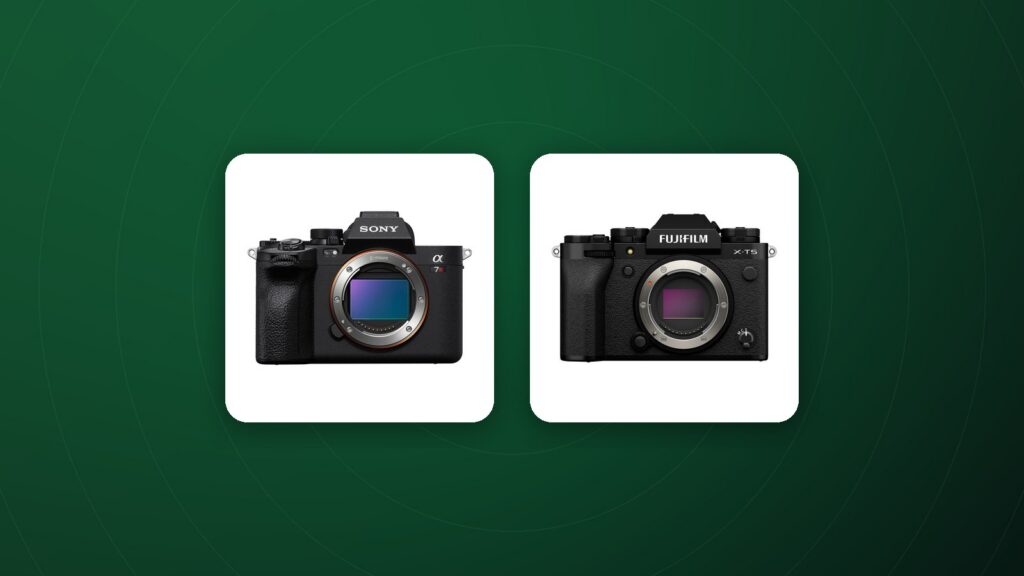
The full frame vs APS-C decision is one of the biggest you will make when choosing a camera system. Sensor size affects image quality in low light, how blurred your backgrounds can be, how much reach you get from telephoto lenses and how large and expensive your whole kit becomes.
What the names mean
A full-frame sensor measures roughly 36 x 24 mm, the same size as a frame of 35 mm film. An APS-C sensor is smaller, roughly 23 x 15 mm, depending on the manufacturer.
The crop factor
Because an APS-C sensor is smaller, it captures a narrower view from the same lens. This is called the crop factor, usually about 1.5x (or 1.6x for some brands). A 50 mm lens on APS-C gives a field of view similar to a 75 to 80 mm lens on full frame. That extra reach is useful for wildlife and sports, but it makes very wide angles harder to achieve.
Low-light performance and dynamic range
A larger sensor collects more total light. At the same output size, full-frame cameras usually produce cleaner images at high ISO and often hold more detail in highlights and shadows. If you shoot weddings, concerts, astrophotography or indoor events, this can be a real advantage.
Depth of field and background blur
For the same framing and aperture, full frame produces a shallower depth of field, which makes it easier to separate a subject from a soft background. APS-C cameras can still create beautiful background blur, especially with fast prime lenses such as f/1.4 or f/1.8.
Size, weight and cost
APS-C bodies and lenses are generally smaller, lighter and more affordable. Full-frame telephoto and fast zoom lenses in particular can be large and expensive. If you travel light or hike a lot, the size difference across a full kit can matter more than the image-quality difference.
Full frame
- Better high-ISO performance
- Shallower depth of field
- Wider angles are easier
- Larger, costlier lenses
APS-C
- Lighter, more affordable kit
- Extra telephoto reach
- Great image quality in good light
- Ideal for travel and wildlife on a budget
Which sensor size is right for you?
- Portraits, weddings, low light, landscapes: full frame is often worth it.
- Travel, street, wildlife and sports on a budget: APS-C is an excellent, efficient choice.
- Video: both work well; check the features of each camera rather than sensor size alone.
Equivalence made simple
To compare lenses across formats, multiply both focal length and aperture by the crop factor. A 35 mm f/1.8 lens on APS-C gives a field of view similar to about 52 mm on full frame and a depth of field similar to about f/2.7. This explains why full frame offers more background blur at the same framing.
Upgrading later
Some systems use the same mount for both formats, which can make upgrading smoother. If you think you might move to full frame later, consider buying lenses designed for full frame now, as they will work on both bodies within the same system.
Video considerations
Both formats can produce excellent video. Some APS-C and Super 35 sized sensors match traditional cinema formats, and many cine lenses are designed for this size. Rolling shutter, heat management and codecs often matter more than sensor size for video.
Frequently Asked Questions
Can I use full-frame lenses on an APS-C camera?
Usually yes, if the mount is the same. The crop factor still applies, so the field of view will be narrower.
Can I use APS-C lenses on a full-frame camera?
Some systems allow it in a crop mode, but the image will use only part of the sensor. Check your camera’s specifications.
Is full frame always better?
Not always. It is better in low light and for shallow depth of field, but APS-C offers a lighter, more affordable kit with extra reach.
Is APS-C good enough for professional work?
Yes. Many professionals use APS-C cameras for events, wildlife, travel and video.
Does full frame produce sharper images?
Not necessarily. Sharpness depends on the lens, technique and resolution; full frame mainly helps in low light and depth-of-field control.
Explore both formats
Compare mirrorless cameras in both sensor sizes, along with matching camera lenses, all with tracked delivery and 60-day returns on eligible items.