Buying Guide
Medium Format Cameras Explained: Are They Worth It?
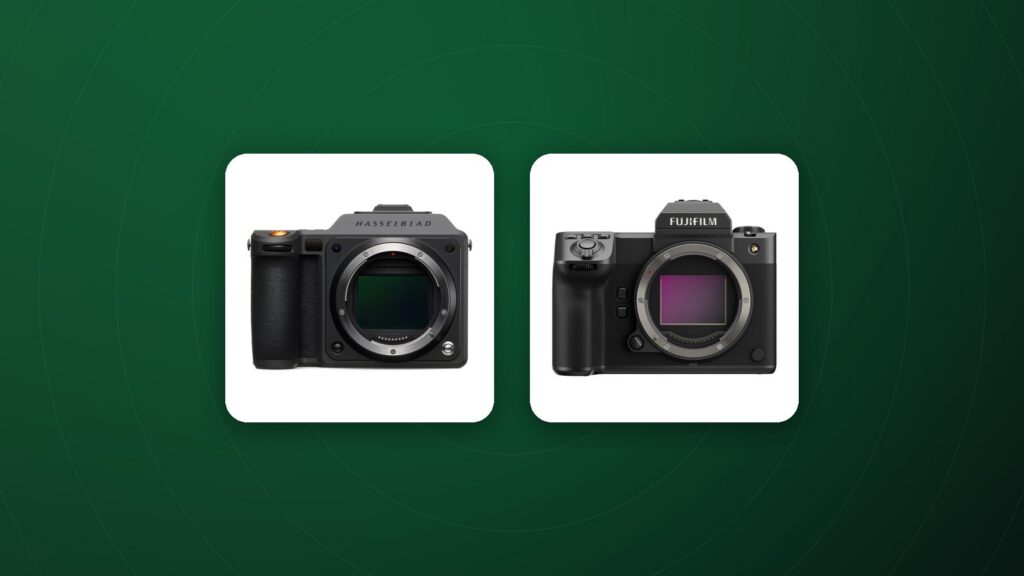
A medium format camera uses a sensor larger than full frame, delivering exceptional detail, smooth tonal transitions and a distinctive look. Once reserved for studios, modern mirrorless medium format systems are now compact enough for landscapes, travel and portraits.
What counts as medium format
In digital photography, medium format usually refers to sensors around 44 x 33 mm, about 1.7 times the area of a full-frame sensor. Some high-end systems use even larger sensors. The larger area allows very high resolutions while keeping individual pixels relatively large.
Why photographers choose medium format
- Resolution and detail: high-megapixel files for large prints, cropping and commercial work.
- Tonality and colour depth: smooth gradations in skies and skin tones.
- Dynamic range: more latitude to recover highlights and shadows in editing.
- Rendering: a natural transition from sharp to out-of-focus areas that many portrait photographers love.
The trade-offs
Medium format cameras and lenses cost more than most full-frame systems, and files are large, which means more storage and a powerful computer for editing. Autofocus and burst speeds have improved a lot but are generally tuned for considered work rather than fast action.
Who is medium format for?
- Landscape and architecture photographers who print large.
- Portrait, fashion and commercial studio photographers.
- Product and fine-art photographers who need maximum detail and colour accuracy.
If you mostly shoot sports, fast wildlife or events, a full-frame mirrorless camera is usually the more practical choice.
Lenses and system
Each medium format system has its own mount and lens line-up. Look at the focal lengths you need now, plus any leaf-shutter lenses if you work with flash outdoors, since leaf shutters can sync at high shutter speeds. See the range of medium format lenses to compare options.
Workflow tips
- Use a sturdy tripod system to get the full benefit of high resolution.
- Plan for fast, high-capacity memory cards and backup storage.
- Shoot tethered in the studio to check focus and colour on a large screen.
Medium format for portraits
Portrait photographers often value the way medium format renders skin tones and the gentle transition from sharp to out-of-focus areas. Combined with high resolution, it allows tight crops and large prints without losing detail. Leaf-shutter lenses add the ability to sync flash at high shutter speeds outdoors.
Medium format for landscapes
For landscape work, the wide dynamic range helps keep detail in bright skies and deep shadows in a single exposure. A sturdy tripod, careful focusing and electronic or vibration-reduced shutter modes help you get the most from every file.
Is it the right time to switch?
If your work regularly ends up as large prints, commercial images or fine-art pieces, and you enjoy a slower, more considered approach, medium format can be a rewarding step. If you mainly share images online, a high-resolution full-frame camera may already meet your needs.
Frequently Asked Questions
Is medium format better than full frame?
It offers higher resolution and smoother tonality, but full frame is faster, lighter and more affordable. The better choice depends on what you shoot.
Can medium format cameras shoot video?
Many modern models can, some with high-quality codecs, but their design priorities are usually still photography.
Are medium format cameras hard to use?
Modern mirrorless medium format bodies handle much like other mirrorless cameras, with familiar menus and electronic viewfinders.
How big are medium format files?
RAW files from high-resolution models can be very large, so plan for fast cards and plenty of storage.
Can I handhold a medium format camera?
Yes. Modern mirrorless medium format bodies are compact enough to handhold, and some include in-body stabilisation.
Explore medium format
Compare medium format cameras with full specifications, tracked delivery and 60-day returns on eligible items.