Buying Guide
Mirrorless vs DSLR: Which Camera Should You Buy?
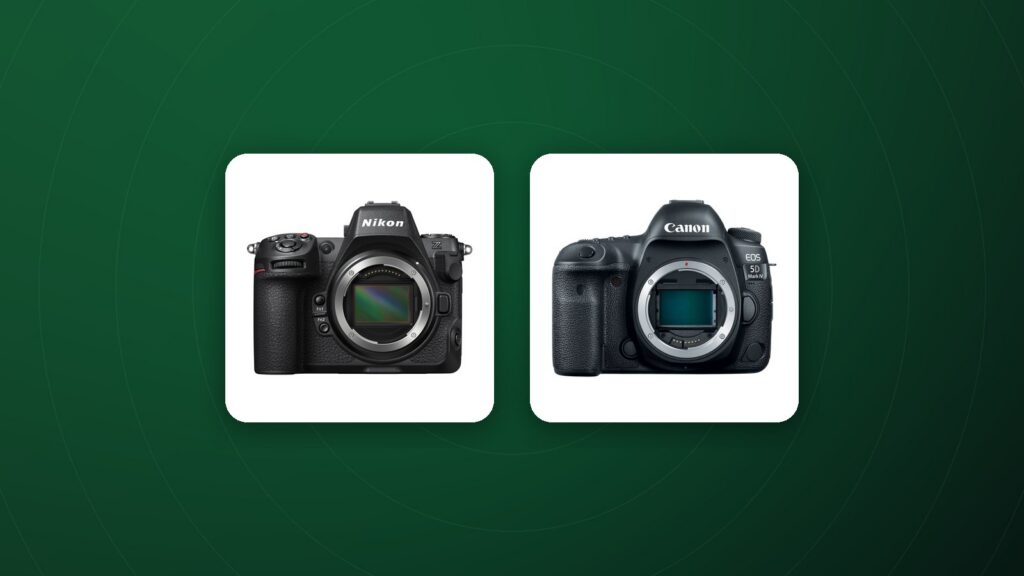
The mirrorless vs DSLR question comes up for almost everyone buying a new interchangeable-lens camera. Both can produce outstanding images, but they work differently, and that affects size, autofocus, video and the lenses you will be able to buy in the future.
How each camera works
A DSLR (digital single-lens reflex) uses a mirror that reflects light up into an optical viewfinder. When you take a picture, the mirror flips out of the way so light can reach the sensor.
A mirrorless camera has no mirror. Light goes straight to the sensor, and you see the image on an electronic viewfinder (EVF) or the rear screen. Removing the mirror box allows a smaller body and opens the door to on-sensor autofocus across the whole frame.
Viewfinder: optical or electronic
An optical viewfinder shows the scene directly, with no lag and no battery drain. An electronic viewfinder shows a live preview of the final image, including exposure, white balance and depth of field, and can display focus aids and histograms. Modern EVFs are sharp and fast, and most photographers adapt quickly.
Autofocus and subject detection
Mirrorless cameras focus using the image sensor itself, which supports eye, face and animal detection and accurate tracking almost anywhere in the frame. DSLRs use a separate autofocus module that is very fast through the viewfinder but usually covers a smaller area of the frame. For people, pets and wildlife, mirrorless autofocus is generally easier to use.
Size, weight and battery life
Mirrorless bodies are typically smaller and lighter, which matters on long walks, trips and hikes. DSLRs often have bigger batteries and longer battery life because the optical viewfinder uses no power. With mirrorless, carrying a spare battery is a good habit.
Video performance
Mirrorless cameras are usually the stronger choice for video. Continuous on-sensor autofocus works while recording, and many models offer high-resolution video, log profiles and in-body stabilisation. DSLRs can record video too, but you compose on the rear screen and autofocus during recording is often less refined.
Lenses and the future of each system
Most new lenses and bodies from the major manufacturers are now developed for mirrorless mounts. DSLR lenses remain widely available and many can be used on mirrorless bodies with an official or third-party lens mount adapter, which makes switching systems easier.
Mirrorless
- Smaller, lighter bodies
- Live exposure preview
- Eye and subject tracking across the frame
- Stronger video features
DSLR
- Optical viewfinder with no lag
- Long battery life
- Large range of existing lenses
- Proven, durable handling
Which one should you choose?
- Choose mirrorless if you want the newest lenses, strong video, compact size and modern subject-tracking autofocus.
- Choose a DSLR if you already own good DSLR lenses, prefer an optical viewfinder or need very long battery life.
Cost of switching systems
If you already own DSLR lenses, the cost of switching is not only the new body. Consider which lenses you can adapt, which you would replace, and whether you need new batteries, memory cards or accessories. Many photographers switch gradually: they start with a mirrorless body and an adapter, then replace lenses over time.
Durability and weather sealing
Both camera types are available with robust bodies and weather sealing. Professional models from either category are built for demanding conditions. What matters most is the specific model’s sealing and build quality rather than whether it has a mirror.
Shooting experience
Some photographers love the immediacy of an optical viewfinder, especially for fast action in bright light. Others prefer seeing the final exposure in an electronic viewfinder, with focus peaking and magnification for manual lenses. If possible, try both and see which feels more natural to you.
Frequently Asked Questions
Are DSLRs obsolete?
No. DSLRs still take excellent photos and many are very durable. However, most new development is focused on mirrorless systems.
Can I use my DSLR lenses on a mirrorless camera?
Often yes, with the right adapter. Check that autofocus and stabilisation are supported for your specific lens and body combination.
Which is better for video?
Mirrorless cameras generally offer better autofocus while recording and more advanced video features.
Do mirrorless cameras use more battery?
Generally yes, because the electronic viewfinder and sensor are always active. Carrying a spare battery solves this for most shoots.
Is mirrorless better for wildlife?
Modern subject-detection autofocus makes mirrorless cameras very capable for wildlife, especially for birds in flight.
Compare both camera types
Explore our mirrorless cameras and DSLR cameras with full specifications, tracked delivery and 60-day returns on eligible items.