Buying Guide
Choosing the Best Lens for Portrait Photography
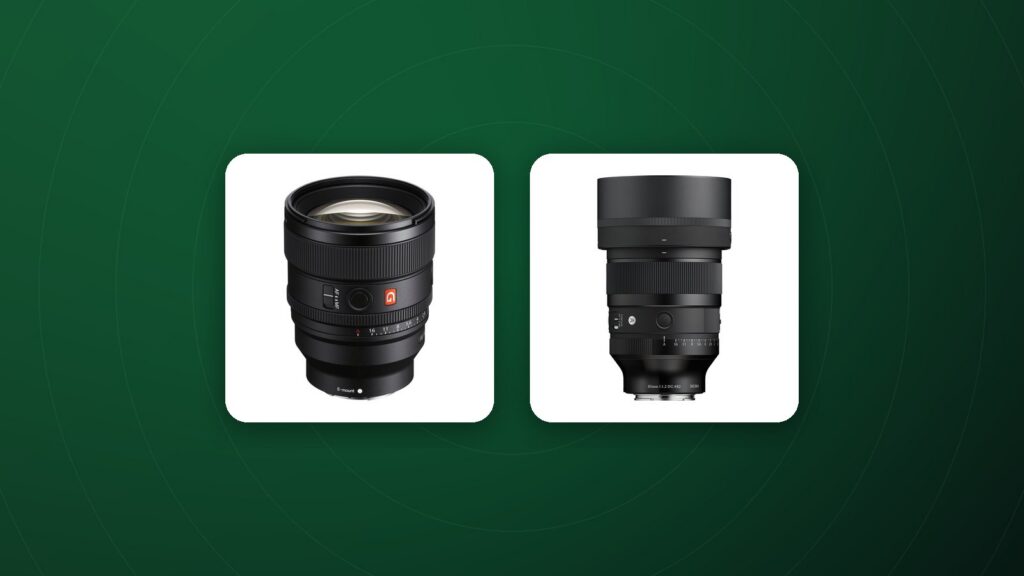
Finding the best lens for portrait photography comes down to two things: the focal length, which controls perspective and how much of the scene you include, and the aperture, which controls background blur and low-light performance.
Why focal length matters for portraits
Standing very close to a subject with a wide lens exaggerates features nearest the camera, such as the nose. Longer focal lengths let you stand further back, giving a more natural, flattering perspective and making the background appear closer and larger behind the subject.
Popular portrait focal lengths (full frame)
- 35 mm: environmental portraits that show the person in their surroundings.
- 50 mm: natural half-body portraits; versatile and usually affordable.
- 85 mm: the classic headshot and head-and-shoulders lens with beautiful compression.
- 105 to 135 mm: tight headshots and very soft backgrounds.
- 70 to 200 mm zoom: flexible framing for events, weddings and outdoor sessions.
On an APS-C camera, multiply by the crop factor: a 56 mm lens behaves much like an 85 mm on full frame.
Aperture and background blur
A wide aperture such as f/1.2, f/1.4 or f/1.8 creates a shallow depth of field, isolating your subject from a busy background. Keep in mind that at very wide apertures the depth of field can be thin enough that one eye is sharp and the other is not. For groups, stop down to f/2.8 to f/5.6 so everyone stays in focus.
Bokeh quality
Bokeh describes how out-of-focus areas look. Lenses with rounded aperture blades usually produce smoother, rounder highlights. Look at sample images to see whether a lens renders backgrounds smoothly or with busy edges.
Autofocus and eye detection
Modern portrait lenses with fast, quiet autofocus motors work well with eye-detection autofocus, keeping the nearest eye sharp even at wide apertures. For video portraits and interviews, smooth, quiet focusing also matters.
Prime or zoom for portraits?
Primes give the widest apertures and the softest backgrounds. A 70 to 200 mm f/2.8 zoom offers flexibility to reframe quickly, which is valuable at weddings and outdoor sessions where you cannot always move.
Portrait lenses for different situations
- Studio headshots: 85 mm to 135 mm primes at f/2.8 to f/5.6 for sharp eyes and controlled backgrounds.
- Outdoor portraits: 85 mm f/1.4 or f/1.8 for creamy backgrounds and warm natural light.
- Weddings and events: 70 to 200 mm f/2.8 zoom plus a 35 mm prime for wider moments.
- Family and lifestyle: 35 mm or 50 mm to include surroundings and interaction.
Working distance and communication
Longer lenses increase the distance between you and your subject. This can help nervous subjects relax, but it also makes communication harder. Many portrait photographers prefer 50 mm to 85 mm because it balances flattering perspective with a comfortable working distance.
Video portraits and interviews
For interviews, a moderate telephoto lens keeps the camera at a respectful distance and produces flattering framing. Lenses with minimal focus breathing and quiet autofocus are especially useful.
Frequently Asked Questions
What is the most popular portrait lens?
The 85 mm prime is widely considered the classic portrait focal length on full frame.
Is 50 mm good for portraits?
Yes. It is great for half-body and environmental portraits; for tight headshots, step back slightly to avoid distortion.
Do I need f/1.2 for portraits?
No. An f/1.8 lens produces beautiful portraits; faster lenses add more blur and light at a higher cost and weight.
Can I use a zoom lens for portraits?
Yes. A 70 to 200 mm f/2.8 is a favourite portrait lens for many professionals.
What aperture is best for headshots?
Many photographers use f/2.8 to f/4 for headshots so that both eyes stay sharp.
Shop portrait lenses
Browse mirrorless camera lenses by focal length and aperture, with full specs, tracked delivery and 60-day returns on eligible items.